
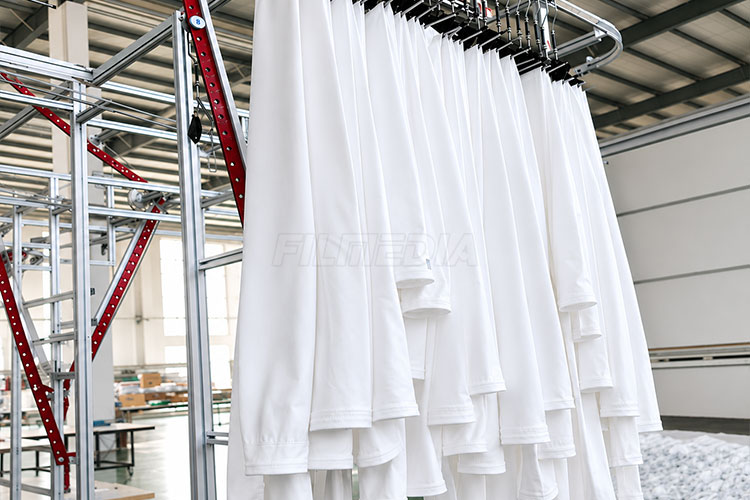
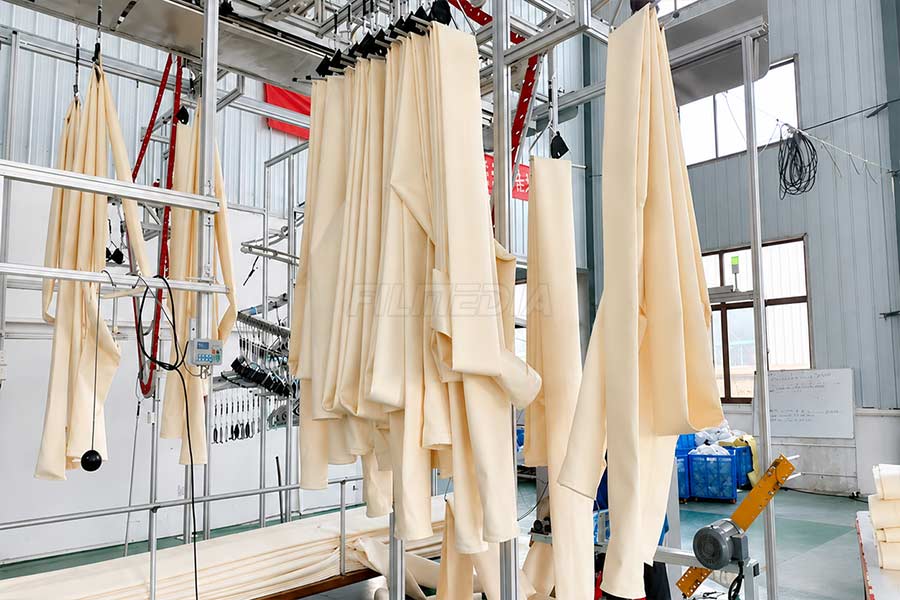
Una bolsa filtrante de membrana PTFE es un medio de filtración avanzado diseñado laminando térmicamente una película microporosa de politetrafluoroetileno (PTFE) sobre la superficie de un sustrato filtrante estándar. Esta membrana ultrafina funciona como una “capa primaria de polvo” permanente. A diferencia de los medios convencionales, la separación del polvo ocurre completamente en la superficie exterior de la membrana desde el primer ciclo operativo, estableciendo una filtración altamente eficiente inmediatamente tras el despliegue.
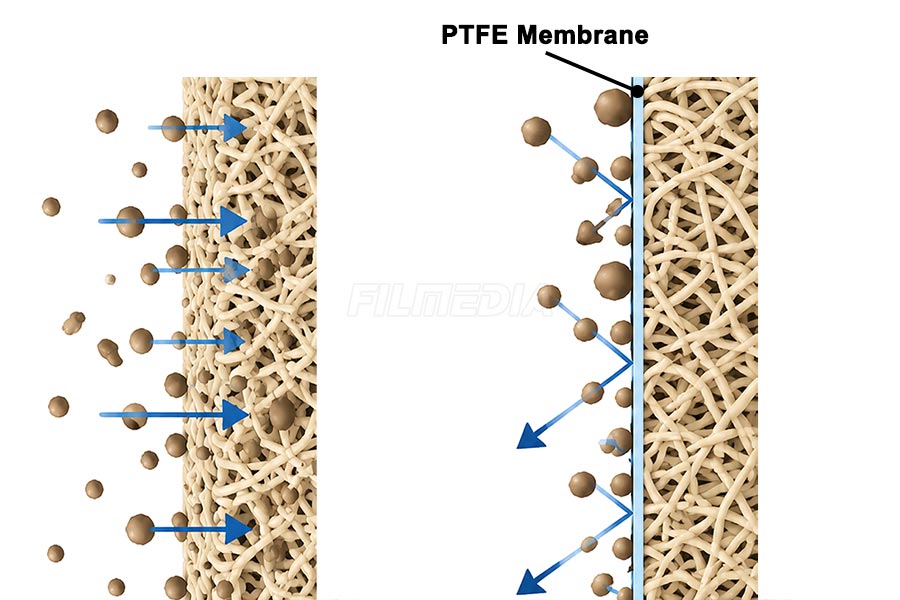
Caracterizada por una estructura porosa única e interconectada, la membrana de PTFE bloquea completamente la penetración de partículas finas en el sustrato, eliminando el riesgo de obstrucción interna de los poros y reduciendo drásticamente las emisiones de partículas. Este mecanismo se define en la industria como “Filtración Superficial”.
Más allá de lograr emisiones cercanas a cero, las propiedades inherentemente antiadherentes y el bajo coeficiente de fricción de la membrana de PTFE permiten que la capa de polvo acumulada se desaloje sin esfuerzo durante la limpieza. Esto garantiza la estabilidad a largo plazo de la presión diferencial (resistencia) del sistema, permitiendo que los mancheros maximicen su eficiencia operativa. En consecuencia, los medios de membrana de PTFE representan la opción premium para la filtración industrial moderna del aire.
CVentajas principales de las mangas filtrantes de membrana de PTFE
1. Transición de la filtración de lecho profundo a la verdadera filtración superficial
- Medios tradicionales: Las casas de mangas industriales estándar suelen basarse en la “filtración de lecho profundo”, donde la captura efectiva de partículas solo se logra después de que se forme una capa de polvo estable sobre y dentro del tejido. Este periodo inicial de curado puede consumir hasta el 10% del ciclo total de filtración, durante el cual los niveles de emisión son elevados, la caída de presión es alta y la eficiencia de filtración se ve comprometida. Esto resulta en una limpieza frecuente de chorros de pulsos, un alto consumo energético, una vida útil reducida de las mangasy una mayor huella de equipo.
- Medios de membrana de PTFE: En cambio, la membrana microporosa impide que el polvo entre en la sección transversal de la bolsa. Ya sea para gestionar partículas gruesas o finos submicroniques, todos los contaminantes son interceptados en la superficie límite. Esto elimina el periodo inicial de curado, proporcionando la máxima eficiencia de filtración instantáneamente.
2. Vida útil prolongada y rentabilidad
Los medios recubiertos de membrana de PTFE presentan propiedades mecánicas y químicas excepcionales en todo tipo de sistemas de limpieza por chorro de pulsos y de aire inverso. La estructura de membrana está diseñada para ser flexible y altamente resistente, ofreciendo una excelente resistencia a la tracción y a la fatiga. Combinado con su superior capacidad de liberación de polvo, el medio reduce significativamente la intensidad y frecuencia requeridas para la limpieza por chorro de pulsos. Operar bajo una presión diferencial consistentemente baja y estable minimiza el desgaste mecánico, prolongando sustancialmente la vida útil de las mangas filtrantes y reduciendo el coste total de propiedad.
3. Baja resistencia operativa y alto rendimiento continuo
- El bucle convencional de obstrucción: Una vez que los medios tradicionales de filtración de lecho profundo entran en línea, las partículas de polvo inevitablemente penetran profundamente en las fibras. Con el tiempo, estas partículas atrapadas provocan un bloqueo irreversible de la profundidad (cegamiento), lo que restringe severamente la permeabilidad al aire y aumenta la resistencia del sistema.
- La ventaja del PTFE: Con tamaños de poros submicráticos y alta porosidad, la membrana de PTFE mantiene una transmitancia de polvo casi nula mientras ofrece una capacidad inicial excepcional de flujo de aire. Cuando el polvo acumulado en la superficie de la membrana alcanza cierto grosor, se desprende naturalmente debido a la gravedad y a la baja energía superficial. Esta sobresaliente facilidad de limpieza mantiene la caída de presión operativa en un nivel mínimo y mantiene un flujo volumétrico alto y estable, permitiendo una producción continua e ininterrumpida.
4. Ciclos de limpieza optimizados y simplificados
La caída de presión operativa de un filtro filtro depende directamente del polvo residual que queda en el medio tras un ciclo de limpieza. Las mangas filtrantes de membrana de PTFE requieren duraciones de chorro de pulso significativamente más cortas (a menudo de solo unos segundos), pero logran una eficiencia de limpieza inigualable. Dado que cada pulso elimina eficazmente la capa de polvo superficial sin permitir un atrapamiento interno, la porosidad original y la densidad de masa de la tela permanecen sin cambios durante años de funcionamiento, manteniendo un rendimiento de baja resistencia.
Cómo elegir la bolsa de filtro de membrana de PTFE adecuada para tus condiciones de funcionamiento
La tela base determina la resistencia a la temperatura, la resistencia química, la resistencia mecánica y la vida útil total de la bolsa filtrante. Filmedia® ofrece una gama completa de mangas filtrantes de membrana de PTFE laminando una membrana de PTFE expandida sobre diferentes sustratos de fieltro con aguja, proporcionando soluciones de filtración fiables para aplicaciones industriales de gases de combustión que van desde la recogida de polvo a baja temperatura hasta ambientes extremadamente altos y corrosivos.
1. PPS Fieltro de aguja + membrana de PTFE
Ideal para aplicaciones de gases de combustión ácidas y carbón
Características de la Base Fabric
El fieltro de aguja PPS (sulfuro de polifenileno) ofrece una resistencia excepcional a ácidos, álcalis y la mayoría de los medios químicos corrosivos. Proporciona temperaturas de funcionamiento continuas de aproximadamente 160°C a 190°C, manteniendo una excelente estabilidad dimensional y rendimiento de filtración.
Aplicaciones típicas
Las mangas filtrantes de membrana PTFE de PPS se utilizan ampliamente en:
- Calderas de carbón
- Plantas de incineración de residuos
- Centrales térmicas
- Hornos industriales de carbón
Estas aplicaciones suelen contener altas concentraciones de compuestos de azufre y gases ácidos. La membrana de PTFE mejora aún más la captura de partículas finas a la vez que evita la penetración del polvo y minimiza el cegamiento de las mangas causado por la condensación ácida, convirtiendo esta combinación en una de las soluciones más rentables para la filtración de gases corrosivos de combustión.
2. Fieltro de aguja de fibra de vidrio + membrana de PTFE
Diseñado para filtración a temperaturas extremas
Características de la Base Fabric
El fieltro de aguja de fibra de vidrio proporciona una resistencia excepcional al calor con temperaturas de funcionamiento continuas de 240°C a 260°C. Ofrece una excelente estabilidad dimensional con prácticamente ningún estiramiento ni contracción bajo calor, y sigue siendo una opción rentable para aplicaciones a altas temperaturas. Aunque la fibra de vidrio tiene menor resistencia a la fatiga por flexión que las fibras sintéticas, funciona excepcionalmente bien en condiciones de funcionamiento estables.
Aplicaciones típicas
Ideal para:
- Recogida de polvo en la entrada y salida del horno de cemento
- Filtración de gases en altos hornos en plantas siderúrgicas
- Procesamiento químico a alta temperatura
- Sistemas de escape metalúrgicos
Para entornos operativos de alta temperatura y relativamente estables con mínima flexión mecánica, las mangas filtrantes de membrana de fibra de vidrio PTFE siguen siendo una de las soluciones preferidas por la industria.
3. Fieltro de aguja P84 + membrana de PTFE
Filtración de alta eficiencia para polvo fino
Características de la Base Fabric
Las fibras P84 (Polyimide) presentan una sección transversal trilóbal irregular única que proporciona una superficie específica excepcionalmente grande, lo que resulta en una eficiencia de filtración excepcional. Con temperaturas de funcionamiento continuas de hasta 240°C, el P84 también ofrece una resistencia superior a la oxidación en comparación con el PPS.
Aplicaciones típicas
Recomendado para:
- Plantas de incineración de residuos
- Plantas de mezcla de asfalto
- Hornos de cemento
- Fundición y procesos metalúrgicos
La combinación de la alta eficiencia de filtración inherente del P84 y la filtración superficial de la membrana de PTFE crea una excelente solución para alcanzar estándares de emisiones ultra bajos mientras captura eficazmente altas concentraciones de partículas de polvo submicrónico.
4. Fieltro de aguja de poliéster (PET) + membrana de PTFE
Solución económica para aplicaciones a temperatura ambiente
Características de la Base Fabric
El fieltro de aguja de poliéster (PET) es el medio filtrante más utilizado para aplicaciones por debajo de 130°C. Ofrece alta resistencia a la tracción, excelente resistencia a la abrasion y bajo coste. Sin embargo, el poliéster es susceptible a la hidrólisis en ambientes de alta humedad.
Aplicaciones típicas
Adecuado para:
- Moledura de harina
- Procesamiento de la madera
- Sistemas de molienda de cemento
- Fabricación farmacéutica
- Recogida de polvo en una planta siderúrgica a temperatura ambiente
En ambientes secos y de baja temperatura, sin humedad significativa ni temperaturas elevadas, las mangas filtrantes de membrana de PTFE de poliéster proporcionan una excelente liberación de polvo, alta eficiencia de filtración y bajos costes operativos.
5. Fieltro de aguja de aramida + membrana de PTFE
Abrasión superior y resistencia mecánica
Características de la Base Fabric
El fieltro de aguja aramida (tipo Nomex®) proporciona temperaturas de funcionamiento continuas de hasta 200°C, además de ofrecer excelente resistencia a la abrasión, resistencia a la flexión y resistencia mecánica. Funciona especialmente bien en condiciones de funcionamiento exigentes que implican alta carga de polvo y limpieza frecuente por pulsos. Sin embargo, es menos adecuado para ambientes fuertemente ácidos y exposición prolongada a hidrólisis.
Aplicaciones típicas
Comúnmente utilizado en:
- Plantas de mezcla de asfalto
- Casas de mangas para horno de cemento
- Sistemas metalúrgicos de recogida de polvo
Las mangas filtrantes de membrana de PTFE de aramida son especialmente adecuadas para aplicaciones que implican frecuentes fluctuaciones de temperatura, polvo altamente abrasivo y desgaste mecánico severo, donde la durabilidad y la larga vida útil son esenciales.